Sunday, May 8, 2016

Freedom Sculpture by Zenos Frudakis


  This sculpture was created by sculpture Zenos Frudakis. His father was an immigrant from Greece and he grew up one of five. This situation influenced his work because he was drawn to Greek style art. He studied at the University of Pennsylvania, receiving multiple degrees and awards in fine arts. Zenos spent a significant amount if time creating this piece instilling grueling details that were quintessential to both the meaning and his purpose. He allowed various aspects of his life to influence the imprints in the base of the sculpture. He made a wax cast of his father’s bust and broke it and used the pieces to cast into the clay. He included some work from his friend who died of AIDS and was unable to complete his own project. He included impressions representing his cat, mother, and father. He also hid many things within his work to express himself. He hid coins that represented the day of his birth. The inclusion of these things served to highlight how, growing up, art was a way to express Frudakis’s identity as well as communicate his appreciation for his loved ones. He’s amazing intellect was also heavily reflected within his works. He received countless awards for the amazing time and detail that set his art apart from others.      

cb25516dac21d96a37d02adf97191123.jpg
     The author intended the piece to signify the restrictions of mortality and his trouble accepting that. However, he also demanded that the piece be in a public place, accessible to anyone. Through this he highlighted the universality of a desire to free one’s self from suffering. He left the fingerprints of his molding in the piece to show how a person had made this by hand. He wanted the audience to have that firsthand visual of the artist and the work put into the piece. He also put places for people to stand in within the piece to give it an interactive factor that highlighted his theme of this shared perspective of being trapped, whether the restraints be internal, external, social, economical, or tangible. Returning to his personal theme of mortality, he expressed this through the simplicity of this human and using this metaphor of this made literally breaking from the mold. He wanted a form to express this that would be lasting, unlike life itself.

3.     
     This piece is beautiful due to the amount of detail and effort that went into making it a combination of both the authors past as well as a piece that is accessible to all. I also think that, despite the authors intended message, he constructed something that can be interpreted in many different ways. Anyone can be inspired by this piece whether it be so try something new, get out of a bad situation, or make a big life change. In it’s purest form, this piece evokes inspiration within it’s audience. Art should not only serve to highlight the artist but the audience as well and this piece successfully does that. The specific details and processes the artist underwent to include important aspects of his life in such a unique way make the piece memorable and moving. He used his art as a means to communicate the death of a friend, the importance of his family, and his own identity. I thing the simultaneous accessibility and personality of this piece is what strikes the audience. The author sends a very strong message and he also put it in a place where anyone can see it, showing the importance of the message and how it can be applied to humanity. He instills this notion of breaking from the mold and now people can be reminded of this through the viewing of his piece.

Monday, January 18, 2016

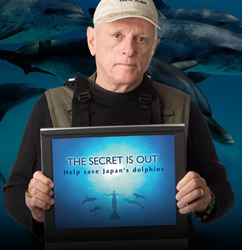
Rick O’Barry pioneered the commercialization of Dolphins with his hit TV show Flipper. He was one of the most renown dolphin trainers in the world. He had a strong history with the animals and their increasing popularity. He trained five dolphins throughout the 1960’s. It wasn’t until he watched Kathy, a flipper dolphin, die in his arms that he realized the effects of this new development in commercialized sea animals. He then worked for forty-four years to try to rectify this mistake. He realized the inhumanity in captive
dolphins and chose to dedicate the rest of his life to better their lives. He rescued over 25 dolphins in South America and began a foundation that educated people on the truth behind show dolphins. This was a time when dolphins were becoming very popular and loved by the public. He was arrested multiple times in the process of making his film, The Cove. O’Barry gathered a crew and went to Taiji, Japan to expose the dolphin slaughtering cove. He gathered footage to expose Japan for it’s inhumanity. The Japanese fought very hard to keep this secret from the world however, O’Barry risked everything to provide exposure to this injustice. In a time where dolphins were beloved by many, O’Barry exposes the truth behind their horrific lives.


Rick O’Barry utilizes this film to expose the injustices brought upon Dolphins while simultaneously making an international commentary on the way this issue has been swiped under the rug. The main underlying themes of this documentary are corruption and small level activism. O’Barry conveys a heavy theme of corruption through his revelation a higher powers knowledge of this crime. He introduces the International Whaling Commission, which is a collection of representatives from around the world and exposes them for their negligence. They were being paid off to look the other way on this matter. This highlights this underlying theme of corruption and greed that permitted this yearly Dolphin slaughtering. O’Barry also supports this theme through revealing that Dolphin meat was being sold without labels in stores. This was putting the publics health at risk due to the extremely high levels of Mercury. He interviews Japanese government officials who confess to being aware of this issue but did nothing due to the profit they were making. This idea of low level activism in shown through the small team O’Barry had, contrasted with the effect the film had. All it took was a group of around 20 people who were willing to dedicate time to the exposure of this event. The shots of a crimson sea filled with mangled dolphins paired with the audio of their scream, evoked deep emotion within the audience. Rick O’Barry utilized this film to enact change and promote awareness. He made it hard to avoid by presenting first-hand footage of what can be classified as horrifically heartbreaking. The striking footage used, along-side very intense music allowed a deeper emotional reaction from the audience. The reality of how they obtained the footage also allowed for a more personal reaction to the film. He utilized graphic images in order to reveal the deep-seated corruption as well as the power of small activism juxtaposed with a profound outcome.


I took a particular interest to this film due to the profound way it effected me. I found the risk, passion, and honesty of to be thought-provoking and enriching. It inspired me to fight for things I feel strongly about and allow my voice to be heard. I see beauty in change and that’s exactly what this film demonstrated. I found the danger and high stakes to further the exposure of the severity of the issue. Seeing someone who demonstrated both sides of the spectrum of animal captivity made this film profoundly enthralling. I strongly agree with the ideas and themes being promoted throughout this film. It brought light to a topic that was dangerous to talk about. It had angst and rebellion that made it more scintillating and thought-provoking. The authors genuine investment in the preservation of this animal highlighted the barbarous acts being brought upon them. The raw footage in this film was disturbingly beautiful, which generated a potent reaction. This images, although horrifying, revealed a beautiful message. That is true art. A piece of art should provoke change and response. This film vividly allows insight into the true beauty of dolphins and why this slaughtering desperately must be put to an end. Its beauty is held in it’s reflective nature and overwhelming reality. The documentary was well filmed, highlighted a catastrophic issue, and called to action which created a beautifully strong message.